Module 3: Understanding Your Financial Aid Offer
Most Common Mistakes Students Make
Counting loans as “free money”
Ignoring housing/food/books when comparing costs
Accepting loans automatically without checking if they’re needed
Forgetting to “ACCEPT” their award on the portal
Not understanding that aid is split by semester
Confusing refund checks as “extra spending money”
Overestimating how much they can work while attending school
Ignoring emails from Financial Aid (resulting in lost aid!)
Missing SAP requirements (GPA + completed credits)
Falling below half-time enrollment

Comparing Schools
Why Comparing Matters
The most expensive school is not always the best school. What matters is the net cost, the support you receive, and the financial burden you will carry long-term. A lower-cost option can still offer a strong education and leave you debt-free.
Build a Simple Comparison Chart
Create a chart like this:
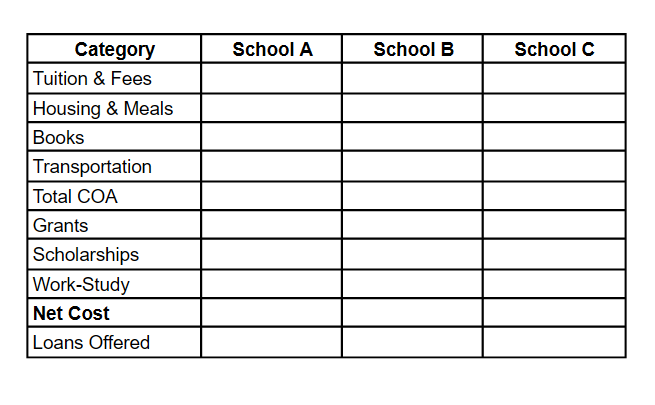
Ask yourself:
Which school gives me more grant aid?
Which school requires the least amount of loans?
Which option keeps me financially stable long-term?
Maintaining Your Aid
Key Requirements
To keep your financial aid every semester:
✔ Stay enrolled at least half-time
Dropping below 6 credits can reduce or eliminate aid.
✔ Maintain Satisfactory Academic Progress (SAP)
Most colleges require:
Minimum 2.0 GPA
Completing a percentage of attempted credits
Staying within maximum credit limits
✔ Reapply every year
FAFSA/TASFA opens around October (though delays may occur).
✔ Check your email + portal weekly
You can lose aid simply by missing a message.

What If You Receive a Refund Check?
Sometimes, your aid covers more than your tuition. The leftover amount is called a refund.
You can use it for:
Books
Transportation
Food
Housing
Childcare
Technology (laptop, software, etc.)
School-related expenses
Smart Money Tips:
Don’t treat it like “fun money.”
Put a portion aside for emergencies.
Save some for next semester.
If you plan to transfer later, save extra funds to help cover higher university costs.

For Community College Students Planning to Transfer
Your future 4-year university will be more expensive.
To prepare:
Save part of every refund check
Apply for transfer scholarships
Keep a strong GPA (many scholarships require it)
Track credit requirements to avoid repeating classes
Even $300–$500 saved each semester adds up and can be crucial later.

Final Note on Loans
Taking on loans should be the last option.
Before accepting a loan, ask:
Do I really need this money right now?
Can I increase work-study or apply for scholarships instead?
Can I choose a lower-cost school for now?
How much will I owe each month after graduation?
Loans can be helpful when used wisely — but they also create long-term commitments.