Module 2: Completing College Applications
In-State Tuition
College tuition can vary widely—even within the same state—depending on where you live. Understanding how “district” and “state” boundaries work can help you make informed choices, estimate your real costs, and even discover hidden savings opportunities.
-
If you live within the college’s local taxing district, congratulations—this is typically the lowest rate you can pay.
Community colleges receive part of their funding from local property taxes. Students who live in those districts help fund the college, so they pay reduced tuition.
This rate is often called the “in-district” rate and can make a noticeable difference.
Example: At a Texas community college, in-district tuition for a semester might range from $2,800 – $3,500, depending on credit hours.
Tip:Check your college’s website for a map or list of supported districts. Some colleges require you to show a recent utility bill or property-tax statement as proof of residency.
-
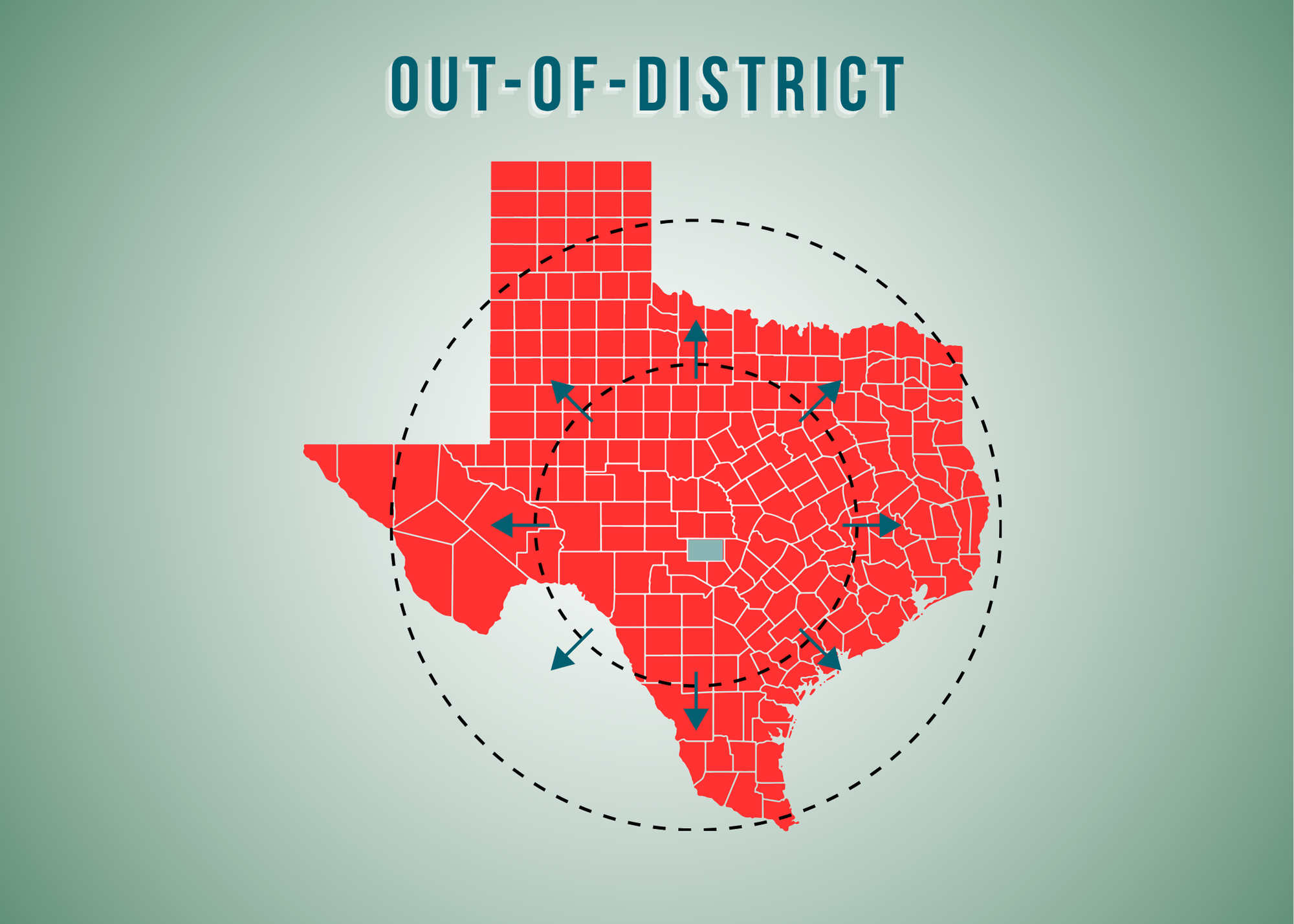
If you live in the same state but outside the college’s taxing district, your tuition will be slightly higher—sometimes a few hundred dollars more per semester.
Even though you still qualify for in-state tuition, you won’t receive the local district discount.
Example: A student living just outside Bexar County may still be considered in-state but will pay out-of-district tuition—raising costs from about $3,200 to $4,500 per semester.
The difference may not seem huge at first, but over two years it can add up to the cost of several textbooks or a full class.
Do you know if your address falls within your community college’s taxing district? If not, what documents could you provide to verify your residency?

Out-of-State Tuition
Students who live in another state usually pay the highest tuition rates because their families don’t contribute to the state or local taxes that support the college.
Out-of-state rates can be two to three times higher than in-state tuition.
Some colleges offer waivers or reciprocity agreements that allow nearby residents from neighboring states to pay in-state rates.
Special exceptions sometimes apply for military families, students from border counties, or those participating in academic partnerships.
Tip: Always ask if your college offers residency waivers—you might qualify based on your situation, even if you technically live out of state.
Important update: As of June 4, 2025, a federal court ruling temporarily blocked part of the Texas Dream Act that previously allowed certain long-term Texas residents to qualify for in-state tuition under specific conditions.
This means some students who were once considered “in-state” may now be reclassified as “out-of-state” until further legal guidance is issued.
Because each college may handle these updates differently, it’s important to:
Check directly with your admissions or business office to confirm your current residency classification.
Ask about exceptions or appeals if your situation has recently changed.
Or contact us for help understanding how this may affect your tuition or financial aid eligibility—we’re here to guide you through it.
-
Texas College Cost Guide (THECB PDF)
This guide shows common cost categories — your real cost may be lower after financial aid and scholarships.